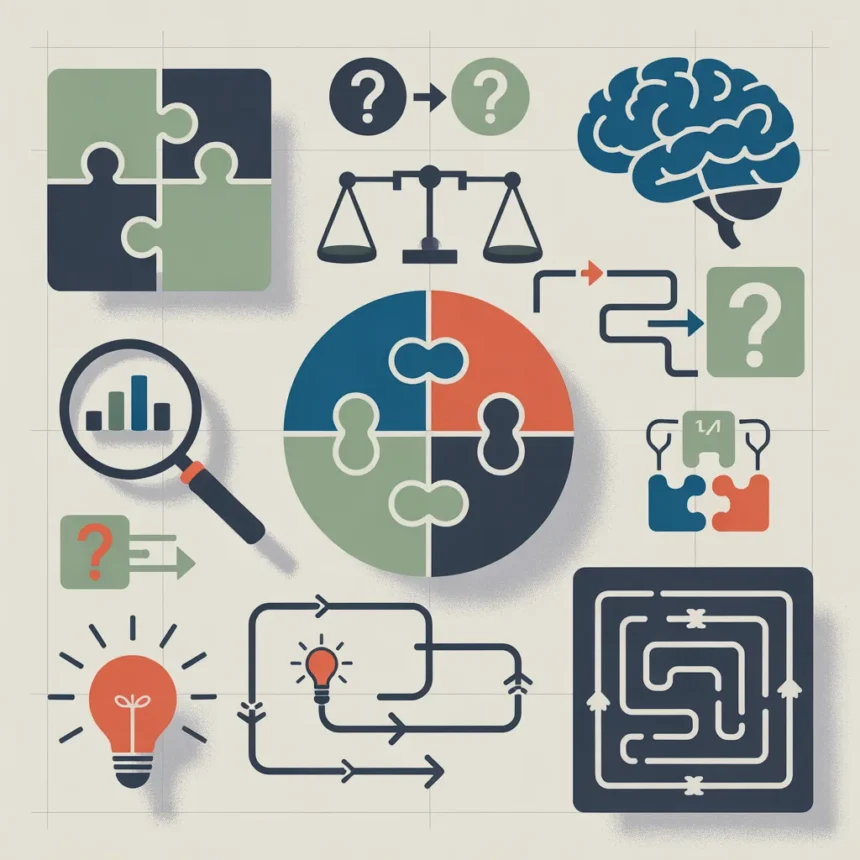
In today’s world, filled with information overload, critical thinking exercises have become more essential than ever. Whether you’re a student, a professional, or just someone seeking to improve your decision-making skills, practicing critical thinking exercises can transform the way you analyze problems, make decisions, and communicate ideas.
- What Are Critical Thinking Exercises?
- The Benefits of Doing Critical Thinking Exercises Regularly
- The Core Elements of Critical Thinking
- Practical Critical Thinking Exercises for Daily Life
- Critical Thinking Exercises for Students
- Critical Thinking Exercises for Professionals
- How to Improve Your Critical Thinking Skills
- The Role of Technology in Critical Thinking Exercises
- Common Mistakes to Avoid When Doing Critical Thinking Exercises
- Real-World Applications of Critical Thinking Exercises
- 30-Day Critical Thinking Exercise Plan
- The Future of Critical Thinking
- Final Thoughts on Critical Thinking Exercises
In this comprehensive guide, we’ll explore what critical thinking exercises are, why they matter, and how you can use them to strengthen your mind every day. Let’s dive deep into the world of logic, reasoning, and reflection to help you become a more analytical thinker.
What Are Critical Thinking Exercises?
Understanding the Concept of Critical Thinking
Before diving into critical thinking exercise s, it’s crucial to understand what critical thinking itself means. Critical thinking is the ability to think clearly and rationally, understanding the logical connection between ideas. It’s about being active (not passive) in your learning and problem-solving processes.
When you practice critical thinking exercise s, you train your mind to question assumptions, evaluate evidence, and approach problems with logical reasoning rather than emotion or bias.
Why Are Critical Thinking Exercises Important?
Critical thinking exercise s are not just academic drills—they are tools that improve how you approach life. In a world full of opinions, social media influence, and complex decisions, the ability to think critically can help you:
- Make informed choices
- Avoid falling for misinformation
- Communicate effectively
- Solve problems creatively
- Think independently
In short, critical thinking exercise s help you develop intellectual discipline and curiosity that translate into real-world success.
The Benefits of Doing Critical Thinking Exercises Regularly
Enhanced Problem-Solving Skills
When you engage in critical thinking exercise s, your mind becomes more adept at analyzing problems from multiple perspectives. You start identifying underlying causes rather than just surface-level symptoms.
Improved Decision-Making
Critical thinkers make better decisions. Practicing critical thinking exercise s trains your brain to pause, evaluate alternatives, and predict outcomes before acting.
Stronger Communication Skills
One surprising benefit of critical thinking exercise s is better communication. When you analyze information logically, you’re able to explain your thoughts more clearly, support your arguments with evidence, and engage in productive debates.
Increased Creativity
Contrary to popular belief, critical thinking doesn’t stifle creativity—it enhances it. By practicing critical thinking exercise s, you learn how to explore unconventional ideas while still maintaining logical structure and coherence.
The Core Elements of Critical Thinking
Before you start with critical thinking exercise s, it’s helpful to understand the core components that define this mental skill.
1. Observation
Observation is the foundation of all critical thinking exercise s. It involves noticing details, asking questions, and recognizing patterns that others may overlook.
2. Analysis
In every critical thinking exercis e, analysis plays a key role. It’s about breaking down information into smaller parts and examining how they relate to one another.
3. Interpretation
Interpretation allows you to make sense of data or experiences. You ask, “What does this mean?” or “Why is this happening?”—questions at the heart of all critical thinking exercise s.
4. Evaluation
Critical thinking requires evaluating information for accuracy, credibility, and relevance. This ensures that your conclusions are well-founded.
5. Inference
Inference is the ability to draw logical conclusions based on available information—a crucial outcome of effective critical thinking exercise s.
6. Explanation
In critical thinking exercise s, explanation refers to your ability to articulate your reasoning clearly. It’s not enough to know something; you should be able to justify it.
7. Self-Regulation
Finally, a strong thinker practices self-awareness—acknowledging biases and emotional reactions that may cloud judgment. Many critical thinking exercise s are designed to strengthen this skill.
Practical Critical Thinking Exercises for Daily Life
Let’s now explore hands-on critical thinking exercise s that anyone can use—whether at home, school, or work.
1. The “Five Whys” Exercise
How it works:
Take any problem and ask “Why?” five times. Each answer leads to the next “why,” helping you dig deeper into the root cause.
Example:
- Problem: “My team missed the project deadline.”
- Why? “We didn’t have enough time.”
- Why? “We underestimated the workload.”
- Why? “We didn’t plan effectively.”
- Why? “We didn’t anticipate challenges.”
- Why? “We skipped risk analysis.”
By the end, you see that lack of risk analysis—not time—was the real issue. This is one of the most powerful critical thinking exercise s for identifying causes instead of symptoms.
2. The Socratic Questioning Method
Socratic questioning encourages deeper thinking through open-ended questions like:
- What evidence supports this idea?
- Could there be another explanation?
- What assumptions am I making?
- What would happen if I’m wrong?
These questions are the foundation of classic critical thinking exercise s and help develop intellectual curiosity.
3. Mind Mapping
Create a visual representation of an idea by connecting related concepts. This critical thinking exer cise helps you see relationships and generate new insights.
4. Role Reversal
Take an argument or problem and analyze it from the opposite perspective. This critical thinking exer cise builds empathy and broadens your analytical viewpoint.
5. “What If” Scenarios
Imagine alternate outcomes by asking “What if?” For instance:
- What if we double our marketing budget?
- What if the competition releases a similar product?
- What if customers lose interest?
These critical thinking exercise s enhance foresight and creativity.
6. Case Study Analysis
Analyzing real-world scenarios—such as historical events, business failures, or scientific breakthroughs—is one of the most effective critical thinking exercises.
7. Debating with Evidence
Engage in friendly debates on current issues, but only use verified facts to support your points. This strengthens both analytical and communication skills through critical thinking exercises.
8. Pattern Recognition
Train your brain to spot trends in data or behaviors. This critical thinking exercise improves your ability to make accurate predictions and strategic decisions.
9. Puzzle Solving and Brain Teasers
Logic puzzles, Sudoku, and riddles are classic critical thinking exercises that boost mental agility.
10. Journaling for Reflection
Reflecting on daily experiences helps you identify lessons learned and improve self-awareness—an underrated but powerful critical thinking exercise.
Critical Thinking Exercises for Students
Classroom Discussions
Teachers can assign critical thinking exercises where students discuss controversial topics using evidence-based arguments.
Group Problem Solving
Collaborative projects are natural environments for critical thinking exercises, as they require negotiation, analysis, and creative compromise.
Research and Evaluation Tasks
Students can enhance their skills by comparing multiple sources, spotting bias, and evaluating credibility—all forms of critical thinking exercises.
Critical Thinking Exercises for Professionals
Strategic Decision-Making
At work, critical thinking exercises can help teams evaluate risks and predict the long-term impact of decisions.
Root Cause Analysis
Professionals often use the “Fishbone Diagram” as part of critical thinking exercises to identify the source of recurring problems.
SWOT Analysis
Analyzing strengths, weaknesses, opportunities, and threats is a practical critical thinking exercise used in business and project management.
How to Improve Your Critical Thinking Skills
1. Ask More Questions
The first step toward better thinking is curiosity. Make questioning a habit in your daily critical thinking exercises.
2. Challenge Assumptions
Don’t take information at face value. Every critical thinking exercise should encourage challenging existing beliefs.
3. Evaluate Evidence
Learn to differentiate between facts, opinions, and assumptions. This is a cornerstone of all critical thinking exercises.
4. Seek Diverse Perspectives
Exposure to different viewpoints helps you develop flexible and open-minded reasoning—a key part of critical thinking exercises.
The Role of Technology in Critical Thinking Exercises
With the rise of AI tools, online simulations, and interactive learning platforms, you can now practice critical thinking exercises digitally.
Online Critical Thinking Games
Web-based games challenge logic, reasoning, and memory—all important for critical thinking exercises.
Virtual Simulations
Business and medical schools use simulations as critical thinking exercises to help learners analyze complex real-world problems safely.
Common Mistakes to Avoid When Doing Critical Thinking Exercises
1. Jumping to Conclusions
Always analyze before concluding. Many people rush this stage, which defeats the purpose of critical thinking exercises.
2. Confirmation Bias
Avoid favoring information that supports your preexisting beliefs. Effective critical thinking exercises encourage exploring conflicting evidence.
3. Emotional Reasoning
Emotions are natural but can cloud judgment. Try to keep your critical thinking exercises logic-based.
Real-World Applications of Critical Thinking Exercises
In Education
Teachers use critical thinking exercises to foster curiosity and problem-solving among students.
In Business
Organizations rely on critical thinking exercises to improve decision-making, leadership, and innovation.
In Healthcare
Doctors and nurses apply critical thinking exercises daily to diagnose accurately and make patient-centered decisions.
In Everyday Life
Even small decisions—like choosing products, evaluating news, or resolving conflicts—benefit from regular critical thinking exercises.
30-Day Critical Thinking Exercise Plan
If you want to make progress, consistency is key. Here’s a 30-day plan to develop your mental sharpness:
| Day | Exercise | Description |
|---|---|---|
| 1 | Observation Challenge | Spend 10 minutes observing your surroundings and noting small details. |
| 2 | “Five Whys” | Analyze a personal or work problem deeply. |
| 3 | Socratic Questions | Pick a topic and ask 10 deep questions about it. |
| 4 | Debate Practice | Discuss a trending topic using only verified sources. |
| 5 | Puzzle Day | Solve logic puzzles or brain teasers. |
| 6–30 | Mix & Repeat | Combine 2–3 different critical thinking exercises each day. |
The Future of Critical Thinking
As automation and AI evolve, critical thinking exercises are becoming more vital. Machines can process data, but only humans can evaluate meaning and ethical implications.
Why It Matters
Without critical thinking, societies risk misinformation, polarization, and poor decision-making. Thus, promoting critical thinking exercises is not just a personal choice—it’s a global need.
Final Thoughts on Critical Thinking Exercises
Practicing critical thinking exercises isn’t just an intellectual hobby—it’s a lifelong skill that shapes how you perceive, evaluate, and interact with the world. From improving your career performance to enhancing personal relationships, the benefits are endless.
If you dedicate even 10–15 minutes daily to critical thinking exercises, you’ll soon notice:
- Clearer thought processes
- Better decision-making
- Increased creativity
- Higher confidence in reasoning
Start small, stay consistent, and watch your analytical abilities transform over time.
Conclusion
Critical thinking exercises empower you to think deeply, reason logically, and act wisely. In a fast-changing world, they’re not just tools—they’re superpowers. Make them a daily habit, and you’ll soon become a master of clarity, logic, and thoughtful decision-making.